Plant and location
Share approximate height, spread and nearby beds or structures.
Small trees and shrubs
Separate smaller suitable requests from large-tree removal and broader landscape construction.
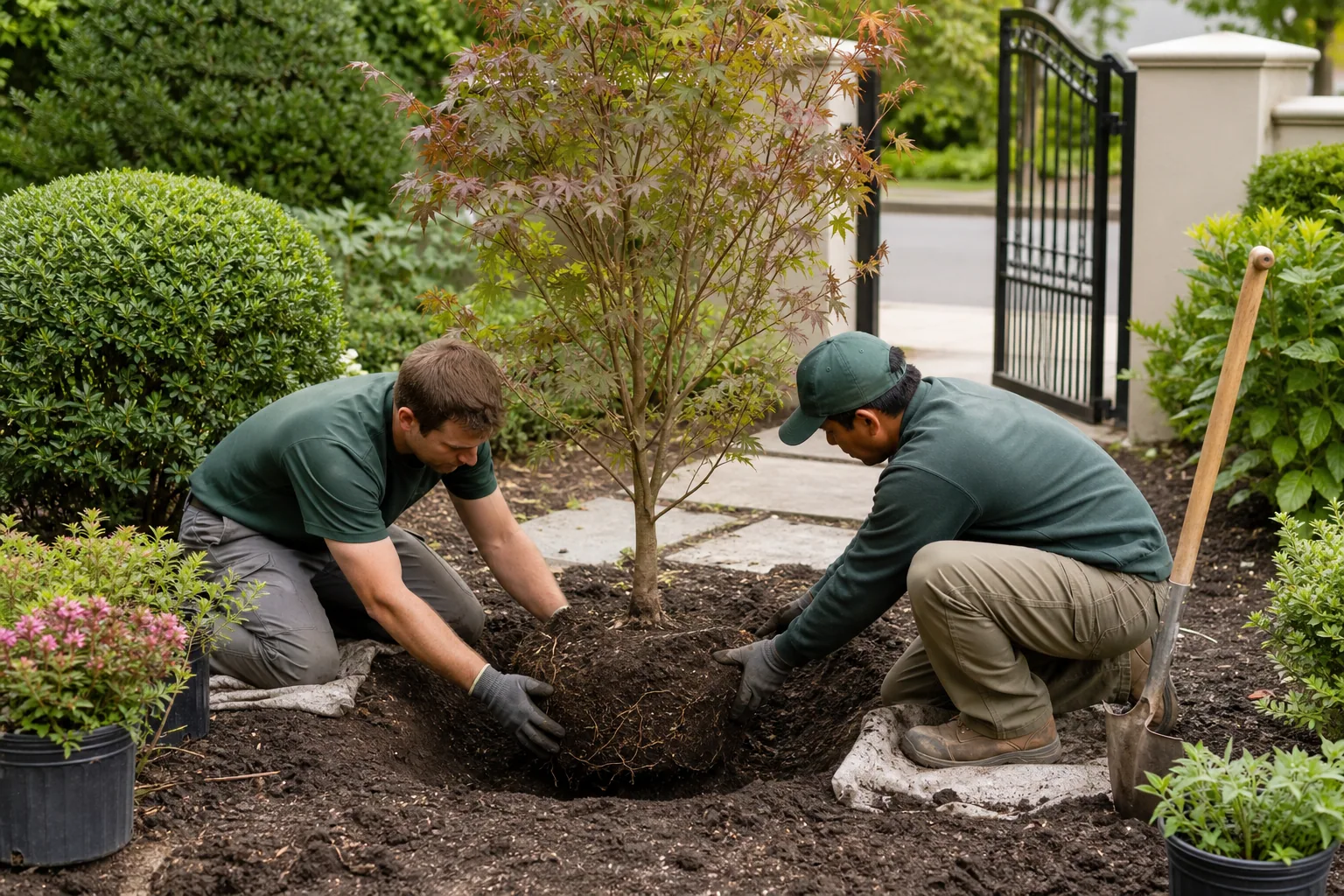
Before we plan the visit
A smaller plant can still involve roots, irrigation, hardscape and access questions. Show the full plant, its surroundings and the route out of the property.
Removal scope does not automatically include paving, irrigation, planting or finished surface restoration.
What we review
Share approximate height, spread and nearby beds or structures.
Show gates, steps and the route from the work area.
State what finish you are asking about without assuming restoration.
Choose whether suitable material stays or leaves.
From request to finish
The plan stays understandable because each decision is attached to the tree, site and finish it affects.
Share the tree, base, nearby property and access from a safe distance.
We confirm targets, gates, slopes and practical equipment positions.
Each tree, work item and debris choice is set out before approval.
We record the agreed finish and leave the approved debris outcome clear.
Ready when you are
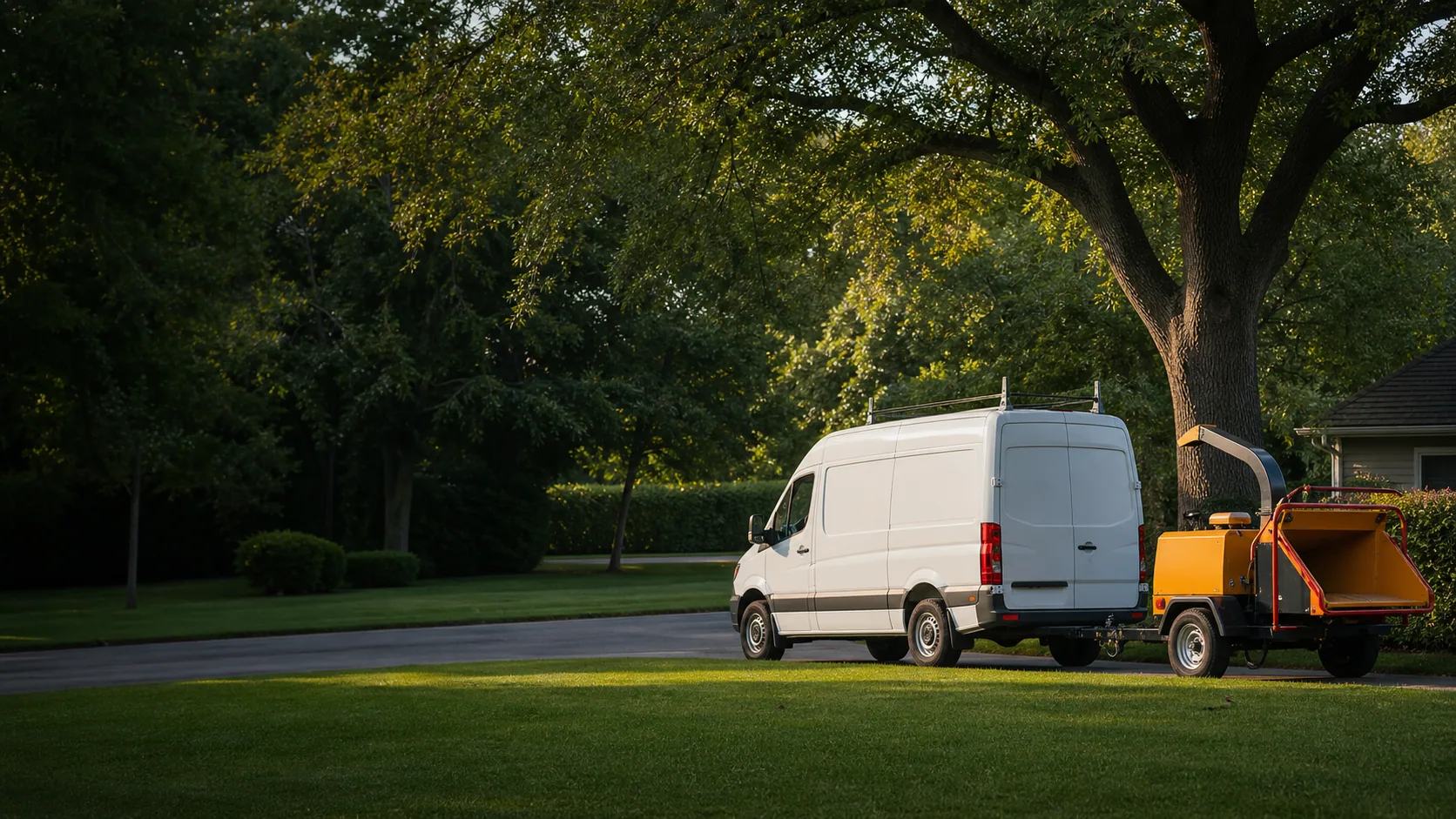
Share the tree, the property and the access around it. We will review the details and explain the next sensible step.